The long-awaited first book by the founder of the enormously favouriteBullet Journal( r) managerial method .
For times Ryder Carroll tried countless organizing structures, online and off, but nothing of them fit the course his intellect wreaked. Out of sheer requisite, he developed a technique called the Bullet Journal that helped him grow frequently focused and efficient. When he started sharing his organization with acquaintances who faced similar challenges, it vanished viral. Just a few years later, to his astonishment, Bullet Journaling is a worldwide change.
The Bullet Journal Methodis about much more than unionizing your notes and to-do lists. It’s about what Carroll calls” intentional living “: weeding out distractions and focusing your time and power to the purposes of what’s truly meaningful, in both your work and your personal life. It’s about spending more period with what you are of interest to, by working on fewer things. His new book shows you how to…
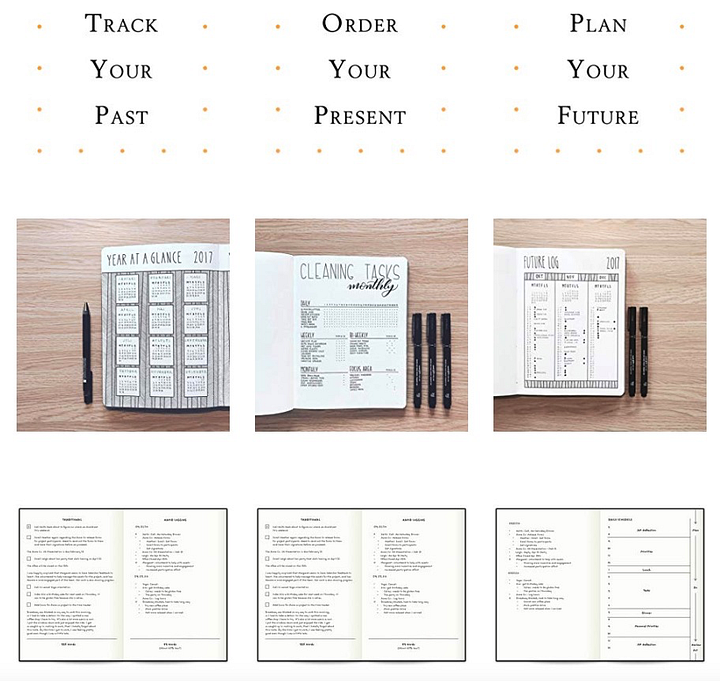
* Track the past: Using nothing more than a pen and paper, create a clear and thorough preserve of your thoughts.
* Order the present working : Find daily pacify by undertaking your to-do list in a more mindful, systematic, and productive way.
* Design the future : Transform your ambiguous interests into meaningful points, and then break those goals into manageable activity stairs that lead to big change.
Carroll wrote this work for frustrated list-makers, overwhelmed multitaskers, and innovatives who need some design. Whether you’ve utilized a Bullet Journal for years or “ve never had” one before,The Bullet Journal Methodwill help you go from passenger to pilot of your own life.
Review
“ Ryder has done an extraordinary task in sharing a thorough and hands-on methodology to implement the strong rehearse of externalizing our thinking — no matter what it’s about! This journal is a great treatise and manual for freeing and directing our consciousness, with lots of tips about how to play in that big and splendid activity .” — David Allen, writer ofGetting Things Done
“ Bullet journaling is one of “the worlds largest” elegant and efficient productivity plans I’ve ever encountered. It will not only help you get more organized but will too help you become a better party. I most recommend this book( and the method it details) for anyone looking to get more out of life .” — Cal Newport, scribe ofDeep Work
“ Whether you are an avid journaler or have always wanted to explore the benefits of journaling,The Bullet Journal Methodsimplifies the capability of putting pen to paper and will undoubtedly transform their own lives, in more access than you can imagine .” — Hal Elrod, scribe ofThe Miracle Morning
About the Author
Ryder Carroll is a digital product designer and inventor of the Bullet Journal. He’s had the privilege of working with companies like Adidas, American Express, Cisco, IBM, Macy’s, and HP.
The Promise
Life had get too busy. It seemed as if my
existence had become only one long to-do list.
I had forgotten about my reveries, my goals,
my what-ifs, my” what if I could’s .”
-Amy Haines
The Bullet Journal method’s mission is to help us grown attentive about how we waste our two most valuable resources in life: our times and our vigor. If you’re going to invest both reading this notebook, it’s only fair to begin by highlighting what’s in it for you. To summing-up it up :P TAGEND
The Bullet Journal technique will help you accomplish more by working on less. It helps
you identify and places great importance on what is meaningful
by depriving away what is meaningless.
How does it do this? By weaving together productivity, mindfulness, and intentionality into a structure that is flexible, condone, and, most importantly, practical. Let’s take a closer look at each.
Productivity
Do you ever feel devastated by all your responsibilities? Sometimes life feels like a hellish game of whack-a-mole, condemned to stomping out never-ending duties, meetings, emails, and texts. Your multitasking madness has you mashing in exercisings by speeding across your suite while FaceTiming your sister-who is asking if you could subsist less heavily. Nothing is get the attention it deserves, and it doesn’t feel good. You dislike frustrating other beings as much as you dislike thwarting yourself. To get more done, you’ve even hacked your sleep, whittling it down to the bare minimum-except now you’re a zombie because . . . you’ve spoofed your sleep down to the bare minimum.
Let’s step back. Every time between 1950 and 2000, Americans increased their productivity about 1 to 4 percent. Since 2005, however, this raise has slowed in advanced economies, with a productivity abridge recorded in the United States in 2016. Maybe our rapidly evolving engineering that promises us near-limitless options to keep us busy is not, in fact, shaping us more productive?
One possible justification for our productivity slowdown is that we’re paralyzed by intelligence overload. As Daniel Levitin writes in The Organized Mind, datum overload is worse for our focus than exhaustion or smoking marijuana.
It stands to reason, then, that to be more productive we need a mode to stem the ebb of digital distractions. Enter the Bullet Journal, an analog solution that provides the offline cavity are essential to process, to judge, and to focus. When you open your notebook, you automatically unplug. It momentarily pauses the influx of information so your memory can catch up. Things become a lower level of blur, and you can finally examine their own lives with greater clarity.
The Bullet Journal will help you declutter your jam-packed imagination so you can finally examine your thoughts from an aim distance.
We often cobble together ways to organize ourselves on the hover. A little of this app; a little bit of that calendar. Over experience, this outcome in an bulky productivity Frankenstein of Post-its, various apps, and email. It kinda labors, but it also feels like it’s coming apart at the seams. You waste time deliberating when data should go and trying to pinpoint it later: Did you write something down in your memoes app or on a Post-it? And where did that Post-it travel, regardless?
Many a great idea, “keeper” envisaged, or important” greenback to self” has fallen victim to a misguided scrap of article or an outdated app. It’s a compounding incompetence that drains your bandwidth, but it’s completely avoidable. The Bullet Journal is designed to be your” source of truth .” No, this is not some dubious invited to worship this methodology. It means that you no longer help wondering where your thoughts live.
Once you’ve learned how to keep your thoughts in one region, we’ll investigate how to prioritize them effectively. Everyone calling, emailing, or texting you wants your answer right away. Rather than being proactive about setting priorities, a lot of us simply give the flood of external requires mounted them for us. Disconcerted and overextended, our openings go under. There vanishes your chance to increase your GPA, to get that advertising, to lead that marathon, to read a record every two weeks.
BuJo makes you at the helm. You’ll learn how to stop reacting and start responding.
You’ll learn how to tackle difficult challenges and turn your indistinct interests into meaningful goals, how to break your goals into smaller, more feasible Sprints, and then finally how to effectively taken any steps. What’s the next step to improving your GPA this semester? Acing all your classifies? No. Get more incremental. In which class are you falling behind? What’s the next job in that class? Writing a article. Okay, what journal do you need to read before writing that paper? Get that bible from the library-that’s the most important thing you are required to do now. What about doing the extra-credit undertaking for the class you’re already acing? Squander of time.
In this journal, we will introduce scientifically proven proficiencies that turn any notebook into a strong tool for surfacing the possibilities and weeding out distractions, so that you can focus your time and vigour on what actually matters.
Mindfulness
Uh-oh, the “M” name. Don’t worry , no sitars asked. When we speak of mindfulness, we’re frequently talking about a raised awareness of the present. Productivity is all punishment and good, but BuJo isn’t designed to help you invent faster on the hamster wheel.
We live in an age where engineering promises us near-limitless options to reside ourselves, hitherto we’re left feeling more confused and undid than ever before. Like when controlling, we watch the world raced by at 600 kilometers per hour with no thought where we truly are. If we’re lucky, we are to be able view some ocean flashing below or lightning ripping through dark remote cloud. For the most percentage, though, we’re semiconscious passengers, killing day before the unnerving descent.
If the outing is the end, then we must learn how to become better travelers. To was better travelers, it is necessary to learn to familiarize ourselves. Where are you now? Do you want to be here? If not, why do you want to move on?
Knowing where you are begins with knowing who you are.
Mindfulness is the process of waking up to see what’s right in front of us. It helps you become more well informed where you are, who you are, and what you want. This is where BuJo comes into play. The deed of writing by hand describes our sentiment into the present moment on a neurological statu unlike any other capturing device. It is in the present moment that we begin to know ourselves. Joan Didion, a far-famed supporter of writing thoughts down, began doing so at age 5. She believed that notebooks represent one of the best antidotes for a distracted world-wide:” We forget all too soon the things we thought we could never forget. We forget the adorations and the duplicities alike, forget what we mumbled and which is something we screamed, forget who we were . . . . It is a good suggestion, then, to keep in suggestion, and I suppose that keeping in touch is what notebooks are all about. And we are all on our own when it comes to keeping those positions open to ourselves: your notebook will never facilitate me , nor mine you .”
For you digital aborigines out there, fear not. Ostracize the image of some impression, squint-eyed Dickensian flesh endlessly scrawling away in a loft by neglecting candlelight. No, here you’ll taught to captivate expects rapidly and effectively. You’ll learn how to periodical at the velocity of life.
This is where BuJo comes into play. We’ll explore numerous techniques that help us form the habit of requesting these kinds of questions, this is why we stop getting lost in the daily grind. In other texts, the Bullet Journal method obstructs us mindful of why we’re doing what we’re doing, this is why we spawn the best possible use of our prized time and energy.
Intentionality
Think back to a work, a lecture, or a quotation that passionately touched you or changed the path you thought about life. It was prudence that motivated you, that maintained so much better promise. All you had to do was act on this newfound learning and events would get easier, better, clearer, more empowering.
Now, how much of such knowledge is still in play-not just intellectually, but essentially? Did you become a better being, pal, or copulate? Did you keep the weight off? Are you happier? Occasions are what you learned has drooped, if it endured at all. It’s not that it wasn’t helpful. It simply didn’t stick. Why is that?
The rush of our busy lives can softly carve out a abys marking our activities from our sentiments. We tend to follow the path of least resist, even when it results away from the things we care about. It can require a lot of ongoing great efforts to impact the change we aim. As any jock will tell you, you need to tear muscle to build it, over and over. Like building muscle, there is a requirement teach our intentions to manufacture them resilient and strong.
Whereas it’s easy to “ forget” to meditate or summon excuses to bounce yoga, there are serious and immediate repercussions when we ignore our day-by-day obligations. To successfully initiate a brand-new sustainable routine, it needs to fit into your jam-packed planned. What if you had a method that championed your goals and retain you more organized throughout your daylight?
The Bullet Journal methodacts as a bridge between your creeds and your actions by integrating into the nitty-gritty of your life.
In addition to unionizing her indebtedness, Amy Haines expended her Bullet Journal to keep track of opinions for her business, parties she wanted to learn from, apps to check out, even brand-new teas to try. She customized her Collections-which you’ll read about later-to cut through the sinking feeling of interminable to-do lists and to stay in touch with what she really wanted to do. She was able to reclaim the things that mattered and had get away.
Through Bullet Journaling, you’ll automatically words a regular garb of introspection, where you’ll begin to define what’s important, why it’s important, and then figure out how to better pursue those events. You’re gently reminded of these revelations every day, which acquires it easier to throw them into action wherever you happen to be, be it a boardroom, classroom, or even emergency room.
Bullet Journalists have been hired for dreaming professions, started businesses, purposed poisonous liaisons, relocated, or, in a number of cases, simply become more material with who they are by making BuJo part of their routine. This methodology is powered by wisdom from habits all over the world. Like a overrule prism, Bullet Journal absorbs these habits and focuses them into one bright ray that will help you clearly see where you are and decorate the way forward. It will entitle you to go from passenger to pilot through the art of intentional living.
Bullet Journaling is no longer an fair-weather friend. It has dutifully suffered and celebrated alongside me through all the different seasons of “peoples lives”. It has sufficed the many captains of my former egoes: the student, the apprentice, the heartbroken, the designer, and more. It always welcomes me without judgement or expectancy. When setting out to write this book, I wanted to create something that could dish you the same way. This bible is designed as your Bullet Journal basi clique. It’s here to prepare you for your first rising and to welcome you back when you need to rest, restock, and recalibrate.
For Those Just Getting Started
If this is your first suffer with the Bullet Journal, welcome! Thank you kindly for spend your time here. To get the most from this bible, I hearten you to follow the linear route, beginning to end. This route is designed to be participatory. We’ll leverage the supremacy of transcription( page 49) enabling you to imprint information systems faster into your thinker. All you’ll need is a blank sheet of paper, an empty notebook, and something to write with.
The Bullet Journal method is comprised of two main components: information systems and the practice. Part II of this volume will concentrate on information systems. You’ll learn their lists of the ingredients and how they’re used. Like in a kitchen, Parts I and II will help you become a skilled path cook. Proportions III and IV are where we delve into the practice. There you’ll learn how to become a chef. We’ll explore the sources and discipline behind these ingredients so that you can customize the Bullet Journal to suit your needs.
For Seasoned Bullet Journalists and Anyone in Between
The assemblies are designed as independent Collections( sheet 87 ), resembling such structures of the Bullet Journal organisation. As long as you’re comfortable with the BuJo vocabulary, you should be able to open the book to any section that grabs your attention. If you’re not, then check out Part II!
Part II delves into the system that you are familiar and desire in detail. We take a closer look at each core Collection and technique, divulging both the reasoning and biography behind their motif. Then, in Part IV, we work all of these concepts to a taunt job. Here you’ll learn how to extend and farther customize the system.
The system, however, is simply one part of what constructs up the Bullet Journal method.
The first parts of this record are about how toBullet Journal. The latter duties are about why to Bullet Journal.
If you’ve been Bullet Journaling for a while, you may have felt there’s more to it than merely keeping your rosters coordinated. You may feel that it’s made you more grounded, self-confident, focused, calmer, even stimulated. That’s because the Bullet Journal is powered by various disciplines and philosophies to help us live with more planned. In this bible, I’ll pull back the screen to disclose why the Bullet Journal have any impact that it does. This deeper context will not only validate what you’re already doing, but can take your BuJo practice to a whole new level.
Whatever level you’re at, fromBuJonewbie to pro, this work is a look into the heart of Bullet Journaling, where mindfulness fulfils productivity enabling you to design a life you want to live.
The Why
Intentional living is the proves of attaining our own picks before others’ options construct us.
-Richie Norton
My firstly start-up, Paintapic, was assume in a wardrobe fitted with millions of thimble-size jackpots of colour. The work earmarked you to turn your photos into a habit paint-by-number gear, terminated with a canvas, make-ups, and brushes. At the time, I likewise had a demanding full-time daytime place, so Paintapic was built entirely on darkness and weekends.
Leadership had changed at my nine-to-five, and the brand-new direction had pulled the push on the creative projects that allowed me to experience my work. Over era, this new eyesight grew so restriction that I no longer felt I was lending real value to the company. My potential impact on Paintapic, however, was restraint merely by the amount of epoch I was willing to invest. I spouted it on. So I Old Yellered my social life for Paintapic’s sake and got to work.
Comments
Post a Comment