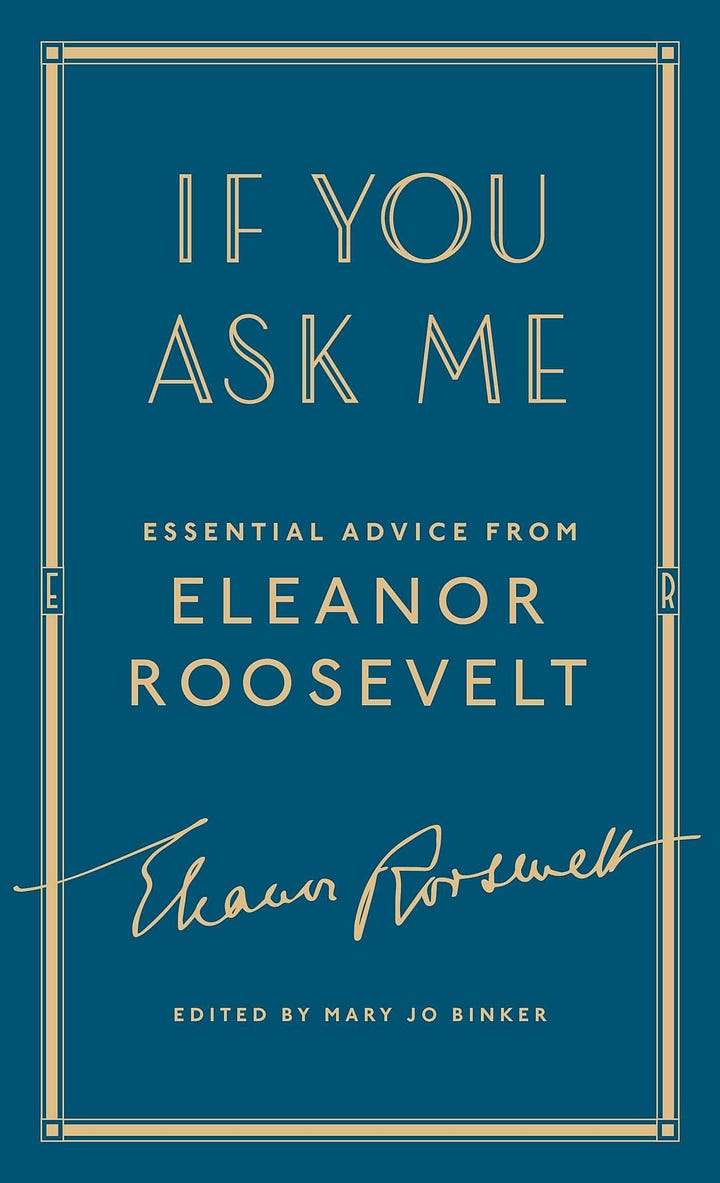
Experience the timeless wit and profundity of Eleanor Roosevelt in this annotated accumulation of candid advice line that she wrote for more than twenty years .
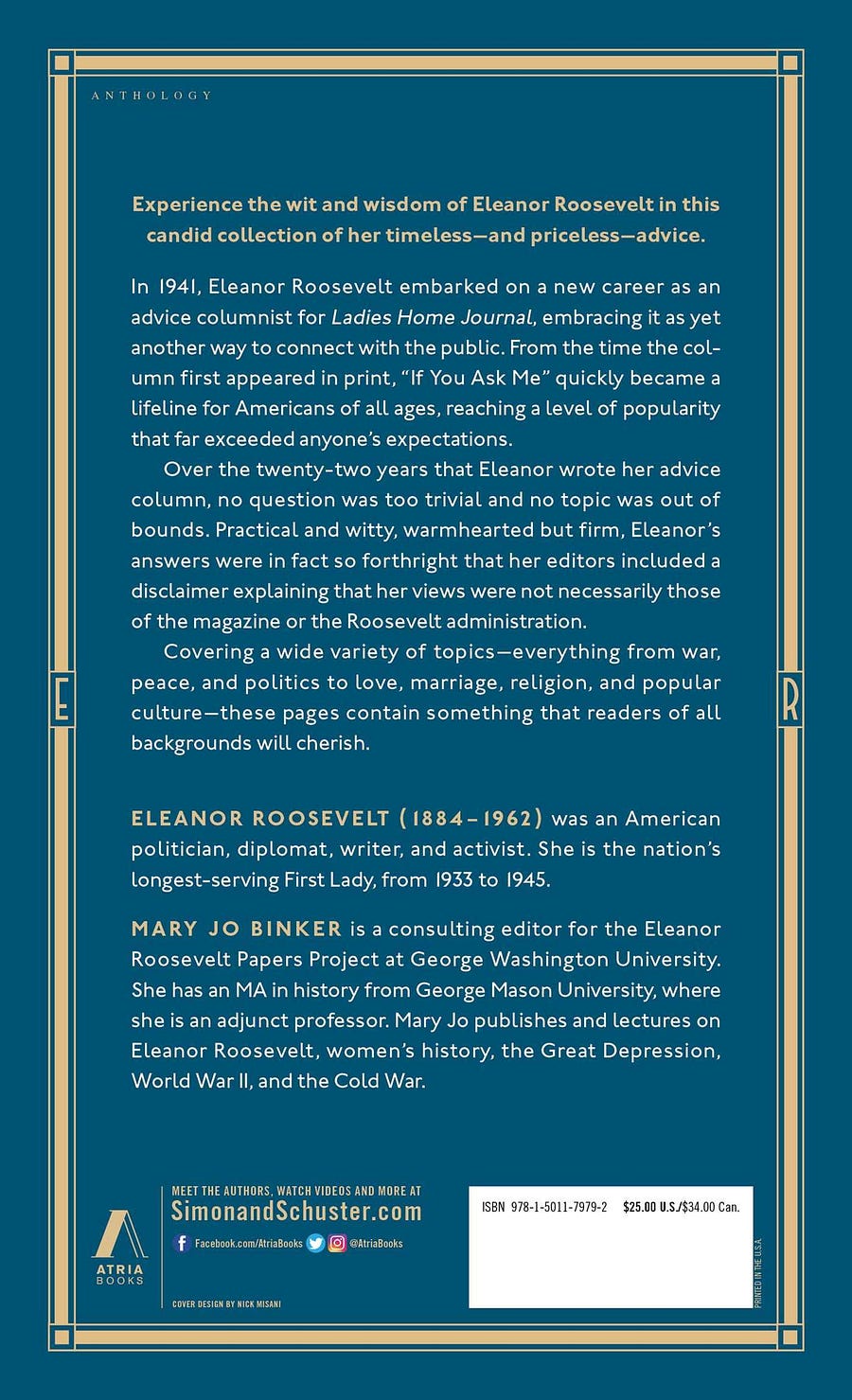
In 1941, Eleanor Roosevelt embarked on a new occupation as an advice columnist. She had already changed the role played by first lady with her regular press conference, her activism on behalf of women, minorities, and teenager, her teach tours, and her syndicated newspaper column. WhenLadies Home Journaloffered her an advice line, she espoused it as yet another way for her to connect with the public.” If You Ask Me” rapidly became a lifeline for Americans of all ages.
Over the twenty years that Eleanor wrote her admonition pillar , no question was very inconsequential and no topic was out of bounds. Practical, warm-hearted, and often humorous, Eleanor’s answers were so forthright her editors included a disclaimer that her views were not necessarily the interests of the publications or the Roosevelt administration. Asked, for example, if she had any Republican friends, she replied,” I hope so .” Queried about whether or when she would retire, she said,” I never plan ahead .” As for the proposal that federal or state governments improve public bomb shelter, she considered the idea “nonsense.” Covering a wide variety of topics — everything from conflict, quietnes, and politics to cherish, wedlock, religion, and favourite culture — these columns uncover Eleanor Roosevelt’s warmth, humanity, and timeless relevance.
Review
“Rooseveltemerges as weaken and opinionated, but likewise open, compassionate, and genuinely very interested in others…Quotable and amazingly timely, this optimistic work is bothbracing and comforting .” (< em form =” box-sizing: border-box ;”> Publishers Weekly )
About the Author
Eleanor Roosevelt( 1884–1962) was an American legislator, envoy, writer, and activist. She is also the nation’s longest-serving First lady( 1933 to 1945 ). A committed counselor for democracy, civil rights, and social justice, she was tireless in her efforts to improve political, financial, and social conditions at home and abroad. She brought the same vitality and devotion to her work on the United Commonwealth where, as chair of the Human Rights Commission she played a key role in the creation and passage of the Universal Declaration of Human Rights( 1948 ). A wife of her experience who was also ahead of her occasion, she never gave up the struggle to create a better world because she believed that” lost causes are typically triumphed in the end .”
User Essential Advice:
“It is always wise, I think, if you feel something is wrong, to try and stand up for what you believe is right.” — Eleanor Roosevelt
Wife, Mother, First Lady, feminist icon, diplomat, teacher, and advice columnist! Eleanor Roosevelt wrote a column called “My Day” and held weekly White House press conferences. gave lectures, had a radio program, advocated for civil rights, advocated for women’s rights, and made personal appearances. She was not a fan of sitting down and felt if you can do things — then you should. Eleanor Roosevelt asked her fellow Americans to write to her and they did! By the end of 1940, she received approximately 130,000 letters per year. In May 1941, she began writing a column titled “If you Ask Me” which was published in the Ladies Home Journal and then in McCalls. Her column consisted of her answering questions that the readers posed to her with the topics ranging from relationships, civil rights, divorce, motherhood, schooling, equal pay, health care and education among other topics. She gave straightforward and at times witty responses.
“If we cannot meet the challenge of fairness to our citizens of every nationality…then we shall have removed from the world, the one real hope for the future on which all humanity must now rely.”
Eleanor Roosevelt was a little bit of a trail blazer for advocating for civil rights even resigning from the Daughters of the American Revolution in 1939 after the group refused to allow an African-American singer to perform in their facility. She even served as the chair of the U.N. Human Rights Commission in 1946 and helped draft what would go on to be known as the Universal Declaration of Human Rights.
This book not only contains questions and answers from her advice column but is also a history lesson. For instance, I did not know that her husband was the only president to have been elected to four terms in office. In 1951, the 22nd Amendment was passed limiting a president’s tenure in office to two terms. She answered the questions based upon her own personal beliefs and experiences. Most of the advice she gave is pretty much common sense. Also, most of her advice is still relevant today. There were some questions and answers that felt dated and one which I felt showed the lack of knowledge about mental health issues during that time. Case in point, a female wrote in detailing her crippling anxiety in social situations, describing her symptoms, and complete discomfort being around people — feeling self-conscious and the advice she is given is to stop thinking about herself and to focus on other people and try to be natural and helpful. Eleanor Roosevelt was attempting to give advice on how to not feel self-conscious in public but should have encouraged the girl to seek help for her anxiety.
This is a wonderful collection of her advice column and I am sure history buffs and Eleanor Roosevelt fans will love this book. She was an outspoken woman, who fought for what she believed, had a strong work ethic and positive outlook. She made herself accessible to the public and the public embraced her and her opinions. Her responses to questions were always respectful and she often shared her own experiences while answering questions.
Comments
Post a Comment